Cutting bakery energy costs: where the biggest lever really lies
Jul 23
Energy & Profitability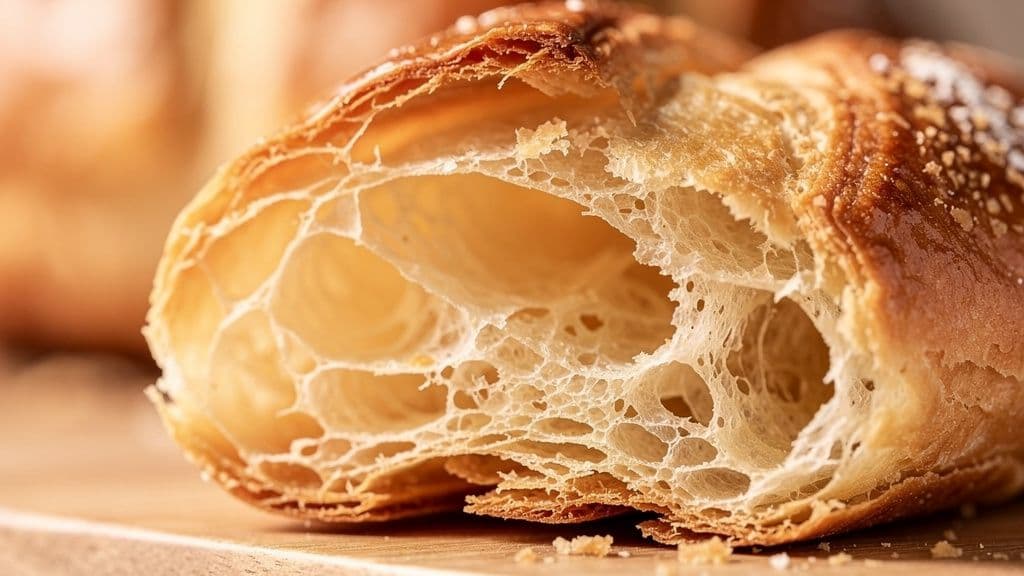
Table of Contents
For many bakeries, energy costs have turned from a minor line item into a strategic risk. Anyone firing up the ovens at three in the morning feels every movement in electricity and gas prices directly in their margin. The good news: energy consumption in the bakehouse has one clear focal point. Those who know it can target their measures where they achieve the most, instead of adjusting many small levers.
Why energy costs have become a permanent issue for bakeries
Bakeries are among the most energy-intensive craft businesses of all. According to the German bakers' confederation, energy costs amount to around six to ten percent of revenue, depending on the business and price level. Before the energy crisis, this share was around three percent. At the peak after 2022, some businesses temporarily had to budget for a multiple of that.
Even though the situation has calmed down since the record levels of 2022, prices have not returned to where they were before the crisis. The average commercial electricity price currently stands at around 27 cents per kilowatt hour, and prices remain volatile. Industry data such as the BDEW electricity price analysis show that structural factors keep pushing prices upward: the expansion of the power grids, rising CO2 pricing of fossil fuels, increasing electrification and growing demand. From 2026, CO2 certificates will be traded in an auction model with a price corridor of 55 to 65 euros per tonne, which tends to make gas-fired baking more expensive over the years.
For day-to-day operations, the sober conclusion is: no bakery should base its calculations on permanently cheap energy. That makes the question of where consumption can really be reduced all the more important.
How much energy does a baking oven consume?
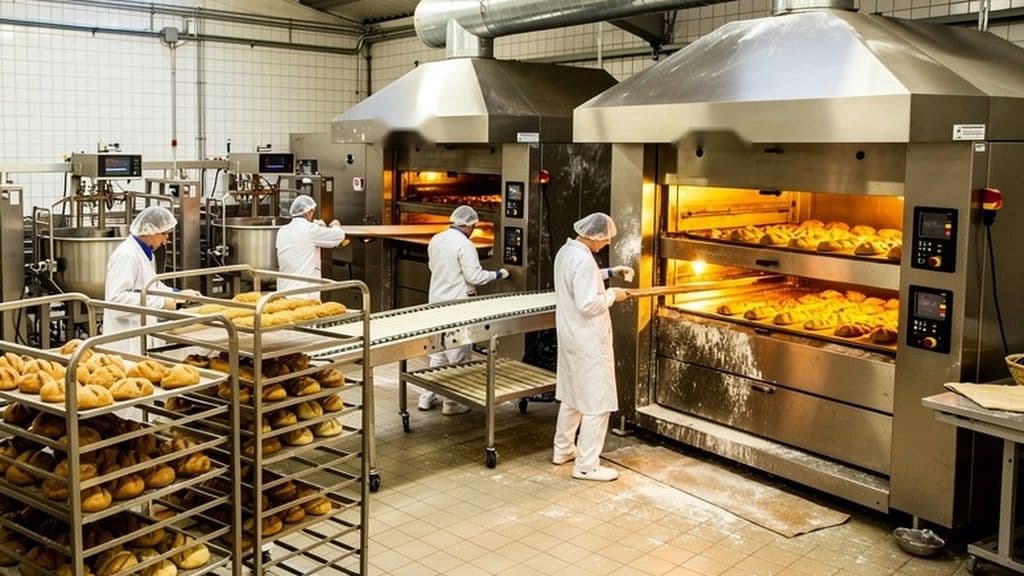
The answer is clear. The oven is by far the largest energy consumer in the bakehouse. Studies from the bakery trade show that ovens account for more than half of total energy use. German studies put the figure for the baking process at around 58 percent, and in Switzerland, with its high share of electric ovens, it is even higher.
Conversely, this means that every measure affecting the baking process itself acts on the largest cost block. This is exactly where the highest savings potential lies, estimated in practice at 15 to 30 percent at the oven alone, depending on the business.
How can a bakery save energy?
In practice, a mix of organisational, structural and process-related measures has proven effective. Obvious steps include:
- Better oven utilisation: An oven that is only half loaded consumes considerably more energy per baked item. Full loading and a well-planned baking sequence reduce specific consumption.
- Insulation and maintenance: Well-insulated oven doors and surfaces, optimised steam injection and regular maintenance prevent unnecessary losses.
- Heat recovery: The waste heat that the ovens produce anyway can be used via heat exchangers for hot water or for heating the proofing rooms.
- Review energy procurement: Comparing electricity and gas tariffs or joining a purchasing group eases the burden, especially for smaller businesses.
These levers make sense and should be used to the full. They improve consumption where energy is applied. The more interesting question, however, is: can the baking process itself be shortened without compromising product quality? Because that is where the largest cost item sits.
Applying the biggest lever at the oven: shorter baking times
This is where a technology becomes interesting that has been gaining ground in the baking industry for years: vacuum cooling, also known as vacuum conditioning. It is based on a simple physical principle. Lowering the ambient pressure lowers the boiling point of water. Under vacuum, part of the residual moisture in the baked goods evaporates, and because evaporation requires energy, this process draws heat out of the product from within. As a result, the baked goods cool from the inside out within a few minutes, the reverse of ambient cooling, without trays and ambient air having to be cooled along with them.
The decisive point for the energy balance: because the baked goods are stabilised under vacuum and continue to develop their crispness and crust, the actual baking phase in the oven can be shortened. Depending on the product, suppliers and the trade press report baking time reductions in the range of around 20 to 40 percent. Independent measurements also show that the cooling itself works very efficiently: cooling around 48 kilograms of white bread from 85 to 30 degrees Celsius takes only about 0.75 kilowatt hours, which corresponds to coefficients of performance in the range of conventional refrigeration compressors.
Since the oven is the largest energy consumer, a shorter baking time hits exactly the block that carries the most weight. Added to this are effects that also improve profitability: thanks to rapid cooling, products stay fresh and crisp for longer, can be processed further immediately, and free oven capacity increases. In many businesses, longer freshness also means fewer returns and less discarded product.
Whether such a system pays off depends on the product range, the volumes and the energy price in question. It is an investment that has to be assessed case by case. For businesses that have identified the oven as their largest energy item, however, it can be worthwhile to start exactly here instead of looking for savings only in many small places.
What cost certainty can I create while the energy market remains uncertain?
No bakery can control prices on the energy markets. What you can influence is how strongly you depend on them. Cutting consumption exactly where it is highest, at the oven, makes a business less sensitive to every price fluctuation. Shorter baking times, better oven utilisation and the use of waste heat push the largest cost block down. That is no guarantee against rising prices, but it is exactly the kind of cost certainty that is realistically achievable in an uncertain market: less energy consumed per roll, and with it a margin that does not wobble with every market movement.
Cetravac specialises in the vacuum conditioning of baked goods. If you would like to find out whether the process pays off for your product range, you can try it out without obligation in a trial week using your own recipes.